
Introduction
Lets talk flowers.
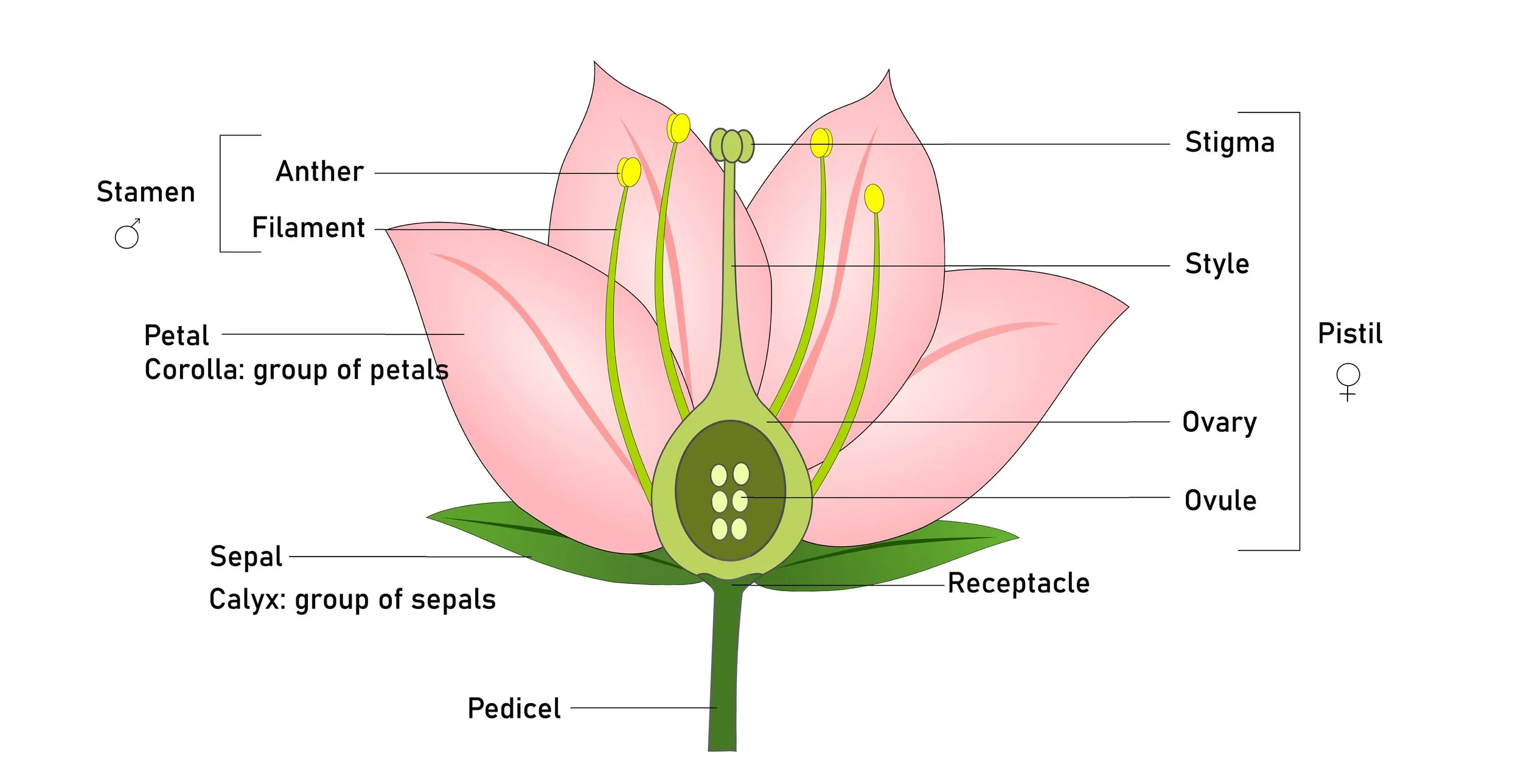
One group of plants produce both male and female parts all united into one flower. The male parts are the long filaments which holds the stamen, where the pollen is produced. The female parts are the style which holds the stigma at one end (where it catches pollen) and the ovary with the eggs located inside.
Some others form different male and female flowers on the same plant.
Thirdly, some create male only or female only flowers on separate male or female plants. In these, male Flowers often appear first to attract pollinators and have thin, plain stems. Female Flowers will usually have a small, immature fruit (ovary) at the base of the petals.
Fertilization
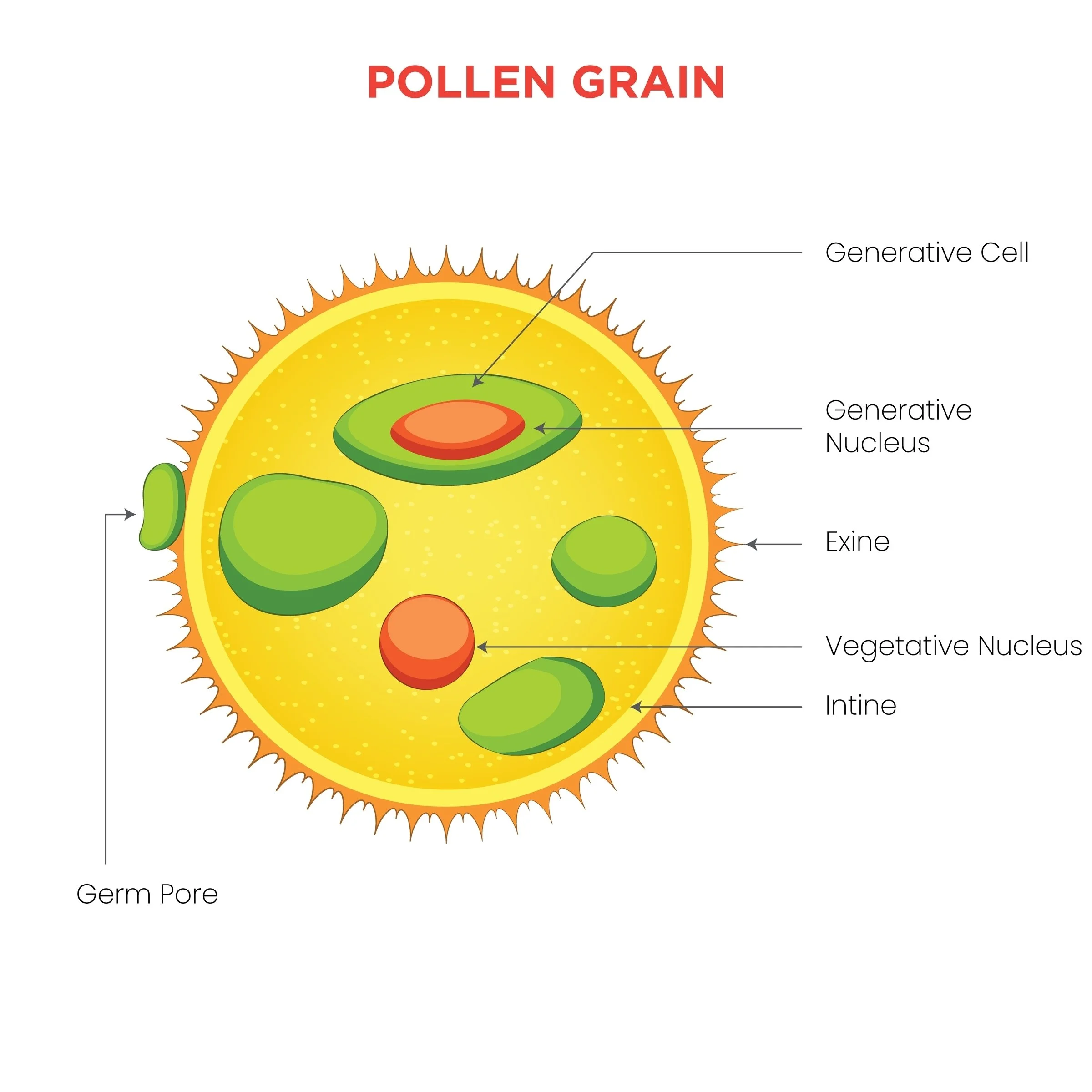
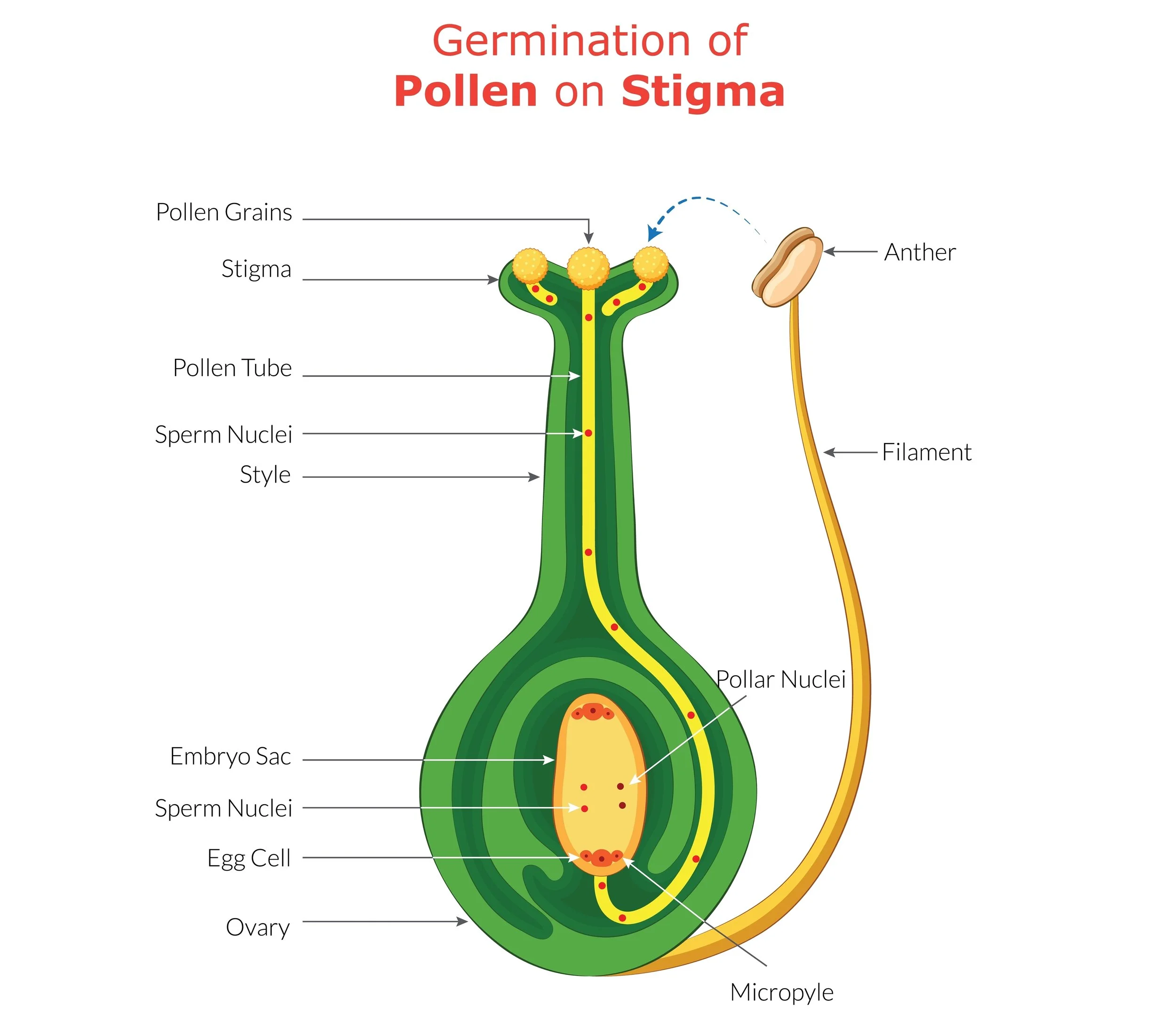
In order to fertilize the egg, the sperm has to land on the stigma, germinate, then travel down the style into the ovary where it can then unite with the egg and form an embryo. The sperm is actually inside the grain of pollen.
Because of evolution, all these parts I just mentioned can differ in size and shape according to the species. But regardless of the specific characteristics of that species the process is usually the same.
The sperm has 2 sets of nucleus - one to fertilize the egg (generative) and make an embryo - the other to fertilize a different set of nucleus in the egg to make the endosperm (vegetative). Endosperm is the food part of the seed.
Step 1 Pollination
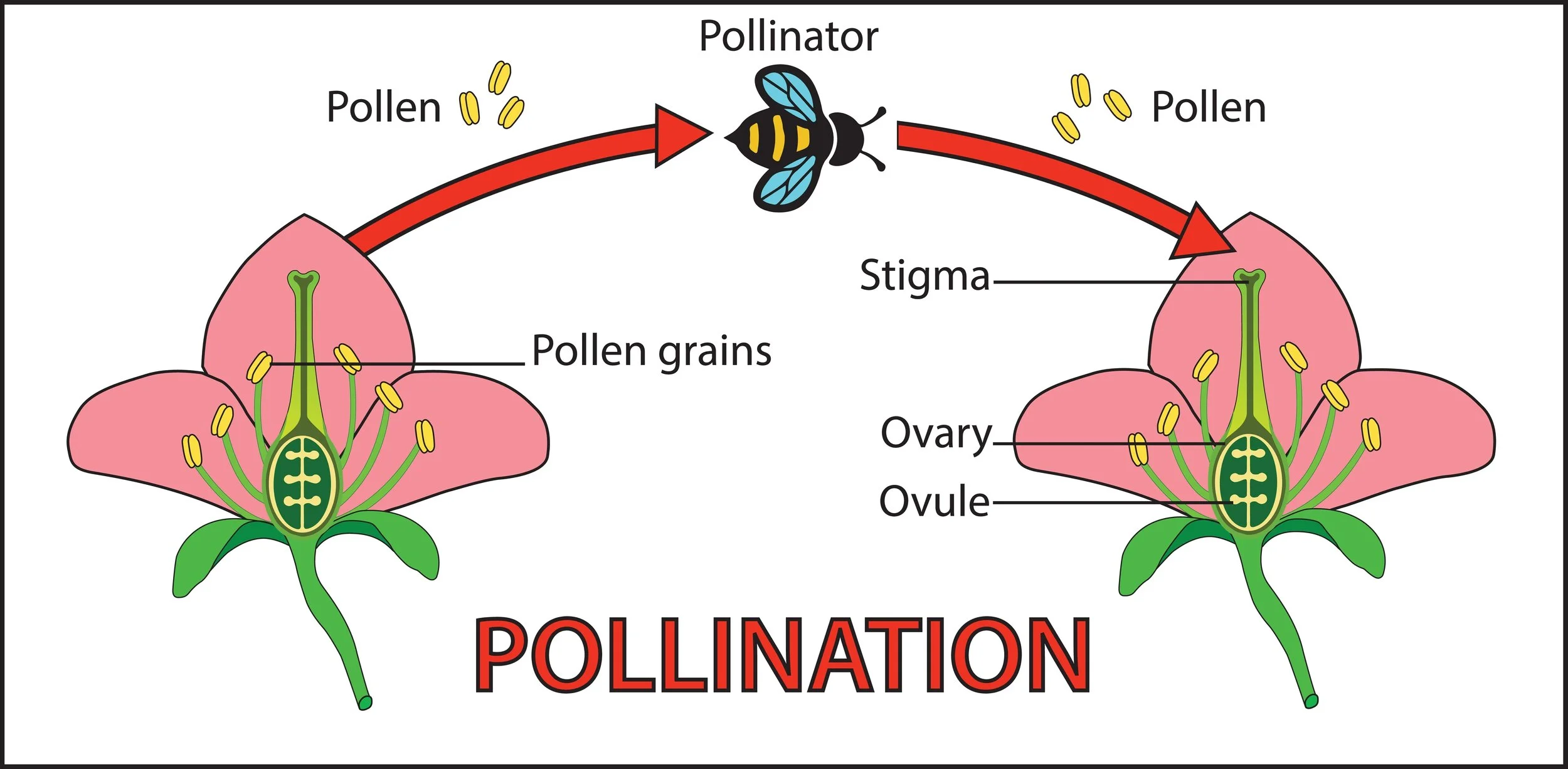
Pollen grains move from the anther (male part) to the stigma (female part) of the same or different flower – but of the same species – usually – but not always ! When pollination occurs between species, it can produce a hybrid offspring of two species. This is not common in nature but more so in plant breeding work.
This process is facilitated by an animal visiting for food. Bees, butterflies, moths, beetles, bats, and over 200,000 species of birds are pollinators.
It can also occur simply by the wind. Many grasses and trees use this method. Or through water in some aquatic plants.
Step 2 Pollen Recognition
The stigma is often covered in a sticky substance or tiny hair-like cells called papillae that trap the pollen when it lands.
Immediately the stigma and pollen engage in a "biochemical conversation." The flower recognizes chemical signatures to ensure the pollen is from the same species.
Only If compatible, will the stigma provides water and nutrients to the grain.
Step 3 Pollen Germination
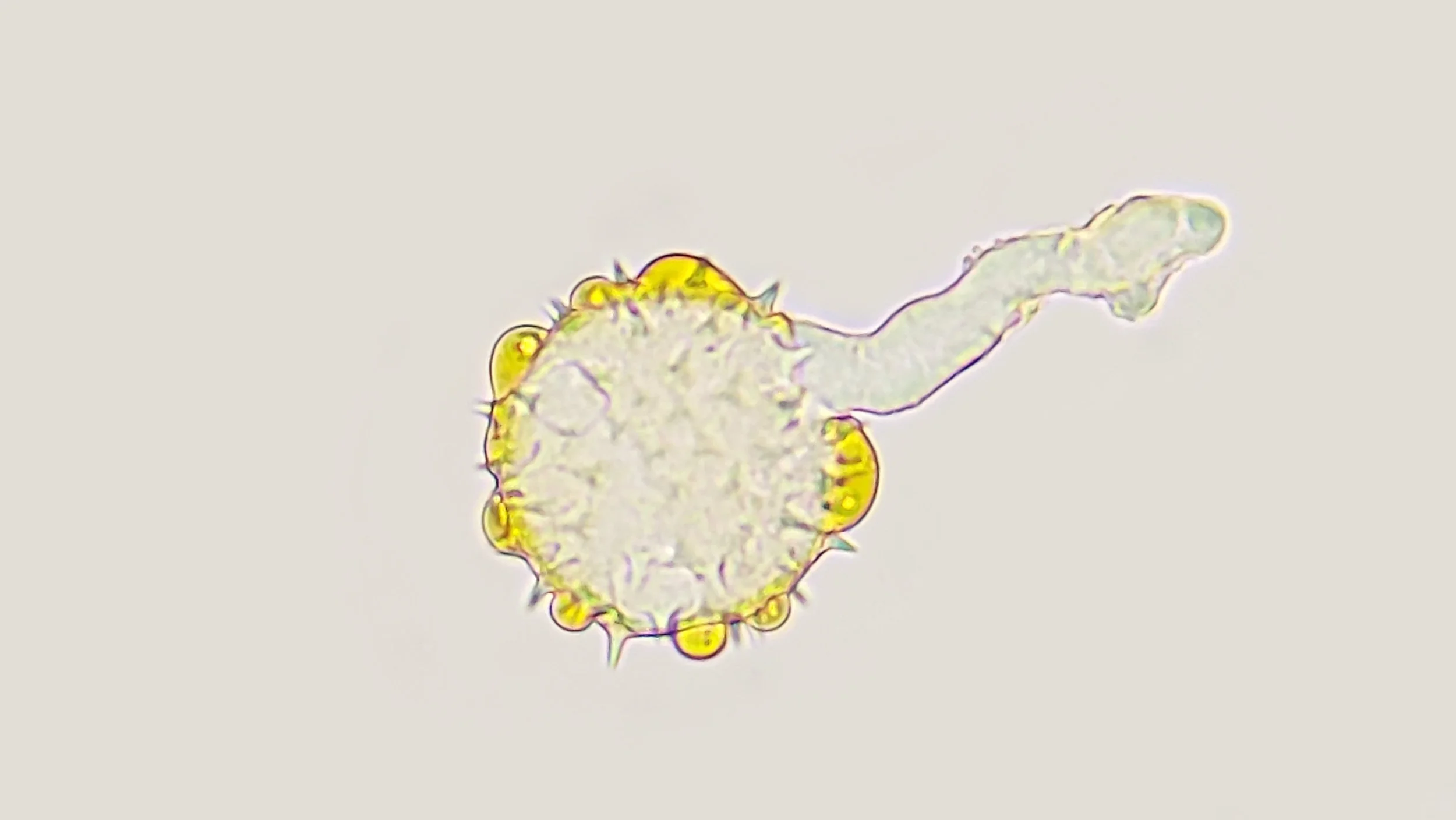
Pollen germination has three stages; hydration, activation and pollen tube emergence.
The pollen grain is severely dehydrated when it is created. This is on purpose enabling it to be lighter and more easily transported from flower to flower.
Germination takes place after rehydration, ensuring that the pollen grain turns into a normal plump cell again. If it is not compatible (like from a different species) it is not helped along by the stigma and will not rehydrate or get nutrients.
Activation occurs when filaments inside the pollen grain become concentrated at the point from which the pollen tube will emerge. Now the pollen tube begins to grow !
Step 4 Traveling down the style
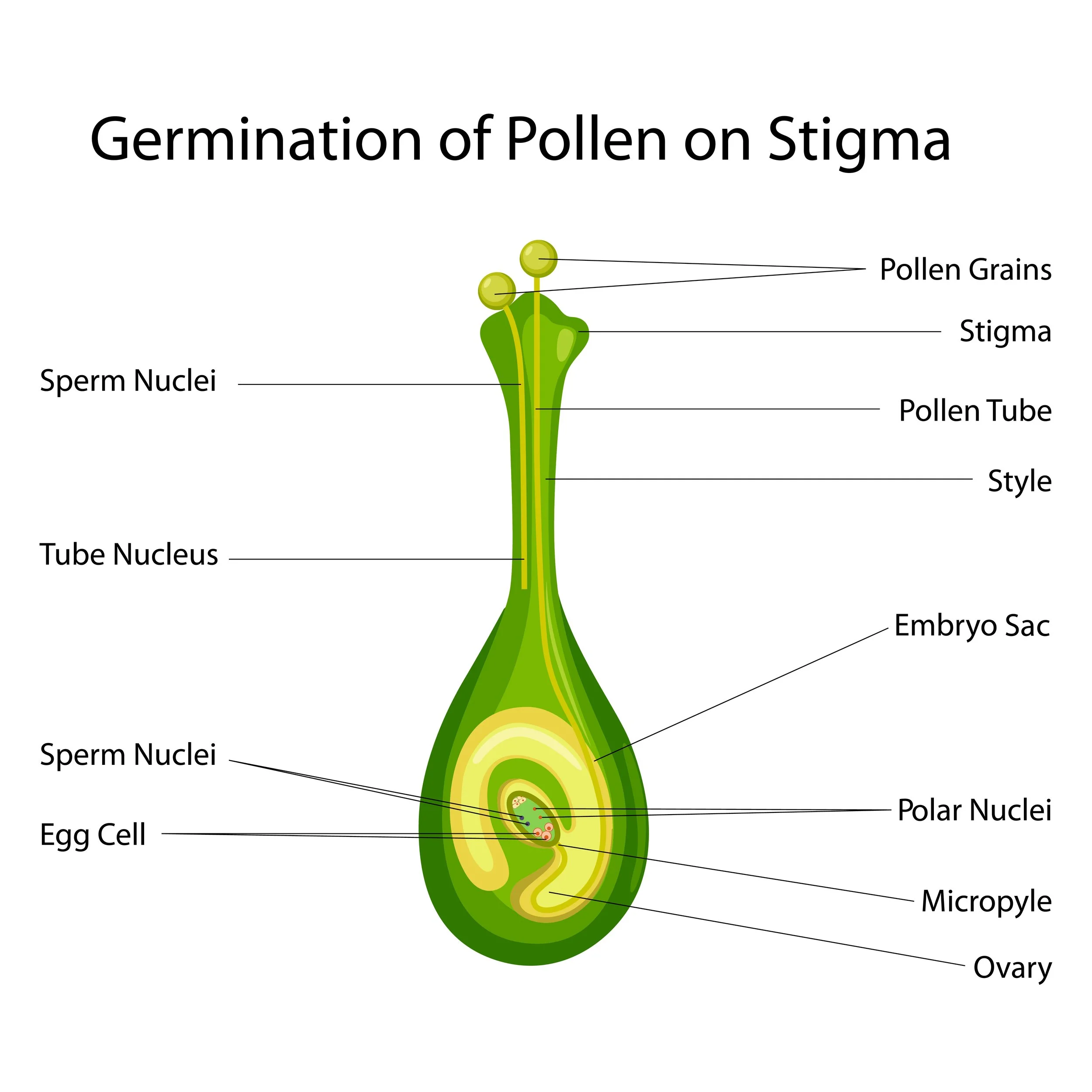
The newly formed pollen tube is like a root - It literally drills through the stigma tissue. The tube elongates only at its tip, pushing through the tissues of the style - one of the fastest-growing cells in nature.
It travels down a specialized "highway" of tissue in the style. This tissue provides sugars and nutrients to fuel the tube's rapid growth.
It is also guided by chemical gradients and signaling molecules secreted by the female tissues – like a "GPS" to lead the tube toward the ovules.
Step 5 Fertilization
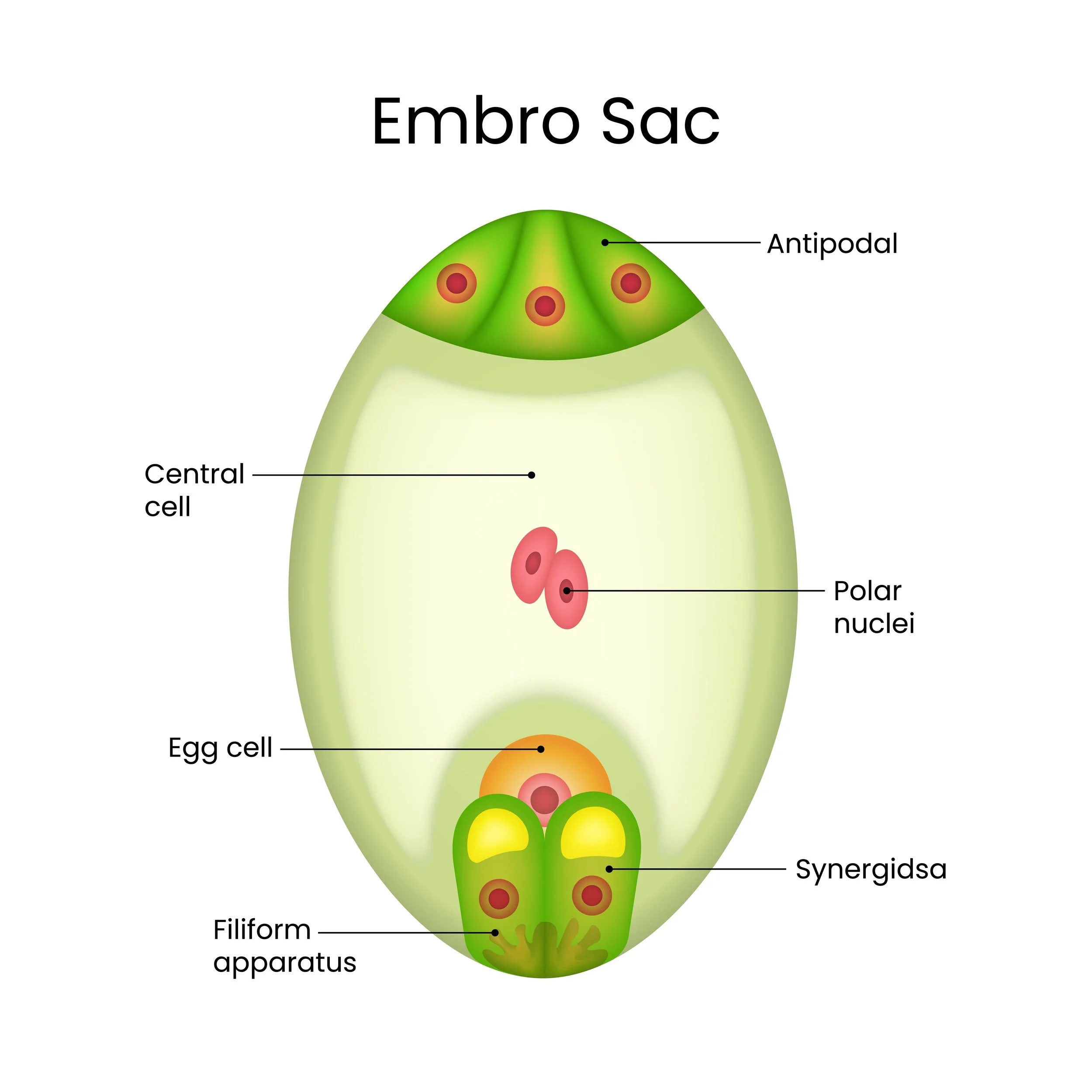
Inside this tube there are two different sets of genetic information – yes ! the sperm has two sets of DNA for different functions. The two gametes travel down the tube to where the egg containing the female gametes are held inside the carpel. Eggs have five sets of nucleus !
After entering an ovule through a microscopic hole called the micropyle, one male nucleus fuses with the two female egg gametes called polar bodies. This will produce the endosperm tissues, a nutritional rich food source for the future seedling.
The other male nucleus fuses with the egg cell to produce the embryo.
All these distinct nucleus work together to form the seed.
And voila ! - it results in the production of a seed, made up of both nutritious tissues and embryo.
Our Garden Care team can show you some seeds made in your garden !
Call us !
Don't delay – the sooner the better !
GREENING NEW YORK FOR OVER 53 YEARS !
Article written by our Staff Horticulturist, Peter B Morris, BSc, MSc, MBA
All photographs used with permission @SHUTTERSTOCK