
Stomata
Introduction
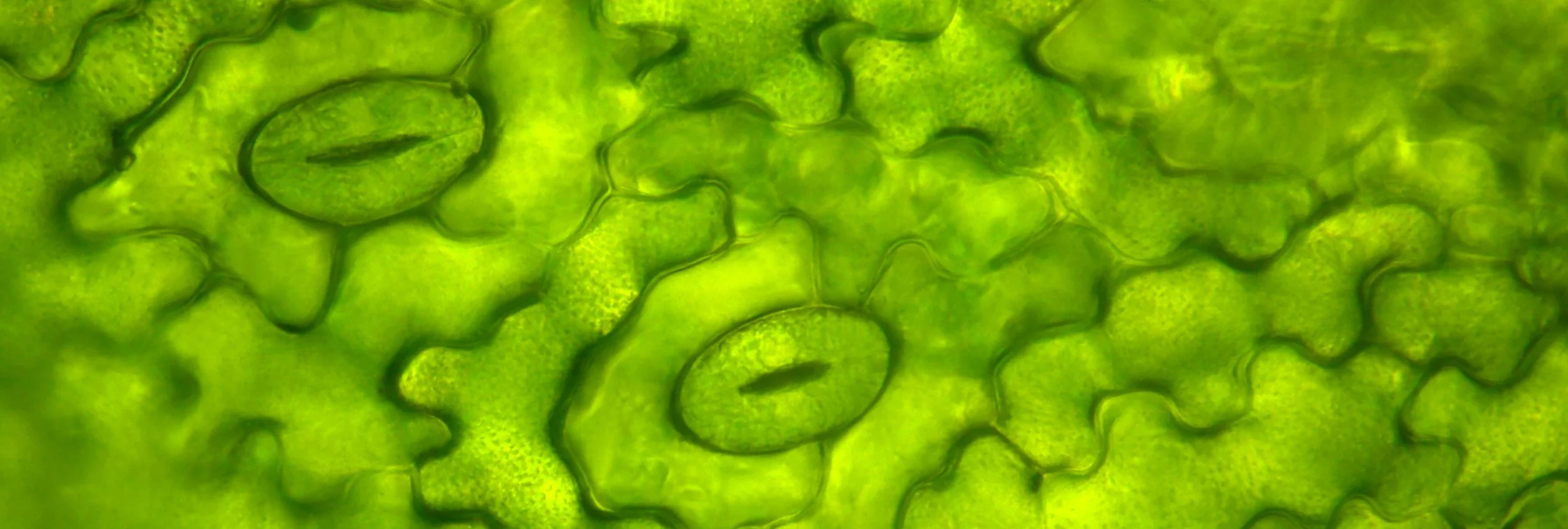
In botany, a stoma (plural – stomata) are microscopic pores primarily found on the underside of plant leaves. The word stoma comes from Greek στόμα – mouth.
Mostly found in the epidermis of leaves, stems, and other organs – it controls the rate of gas exchange between the internal air spaces of the leaf and the atmosphere.
Structure
The pore itself is bordered by a pair of specialized cells known as guard cells that regulate the size of the stomatal opening. They have a crescent shape - which is the key to opening and closing the pore.
Function
They are the primary gateway for gas exchange in plants as well as the regulation of water vapor - transpiration. They mainly take in carbon dioxide for photosynthesis and release the oxygen produced by the plant.
By opening, stomata allow carbon dioxide to diffuse into the leaf. The plant uses this gas, along with sunlight and water, to create glucose, while releasing oxygen as a byproduct.
When open, water vapor exits the plant into the atmosphere through open stomata. This process creates a negative pressure gradient, effectively pulling water and essential nutrients up from the roots to the leaves.
The Trade-off between Gas Exchange and Water Loss is a constant balancing act. Plant species have evolved many methods to adapt to their climates to manage this balance.
Opening and Closing
Pores open and close in response to environmental conditions and the plant's internal water pressure - turgor pressure.
When water enters the guard cells, they swell and become turgid. Because the inner cell walls are thicker than the outer ones, the swelling causes them to curve outward – this kidney bean shape widens the pore. This typically happens during the day to allow carbon dioxide intake for photosynthesis.
When the plant is losing too much water (such as during hot or dry conditions), the guard cells lose water and become flaccid. The cells become almost parallel, causing the pore to close and conserve moisture.
Evolutionary adaptations
Most angiosperm trees have stomata only on their lower leaf surface, but not all !
When leaves develop stomata on both leaf surfaces, the stomata on the lower surface tend to be larger and more numerous. But some plants evolved fewer stomata but larger in size. Others evolved small stomata that were more numerous.
Classification of stomata types is based on the size, shape and arrangement of the subsidiary cells that surround the two guard cells.
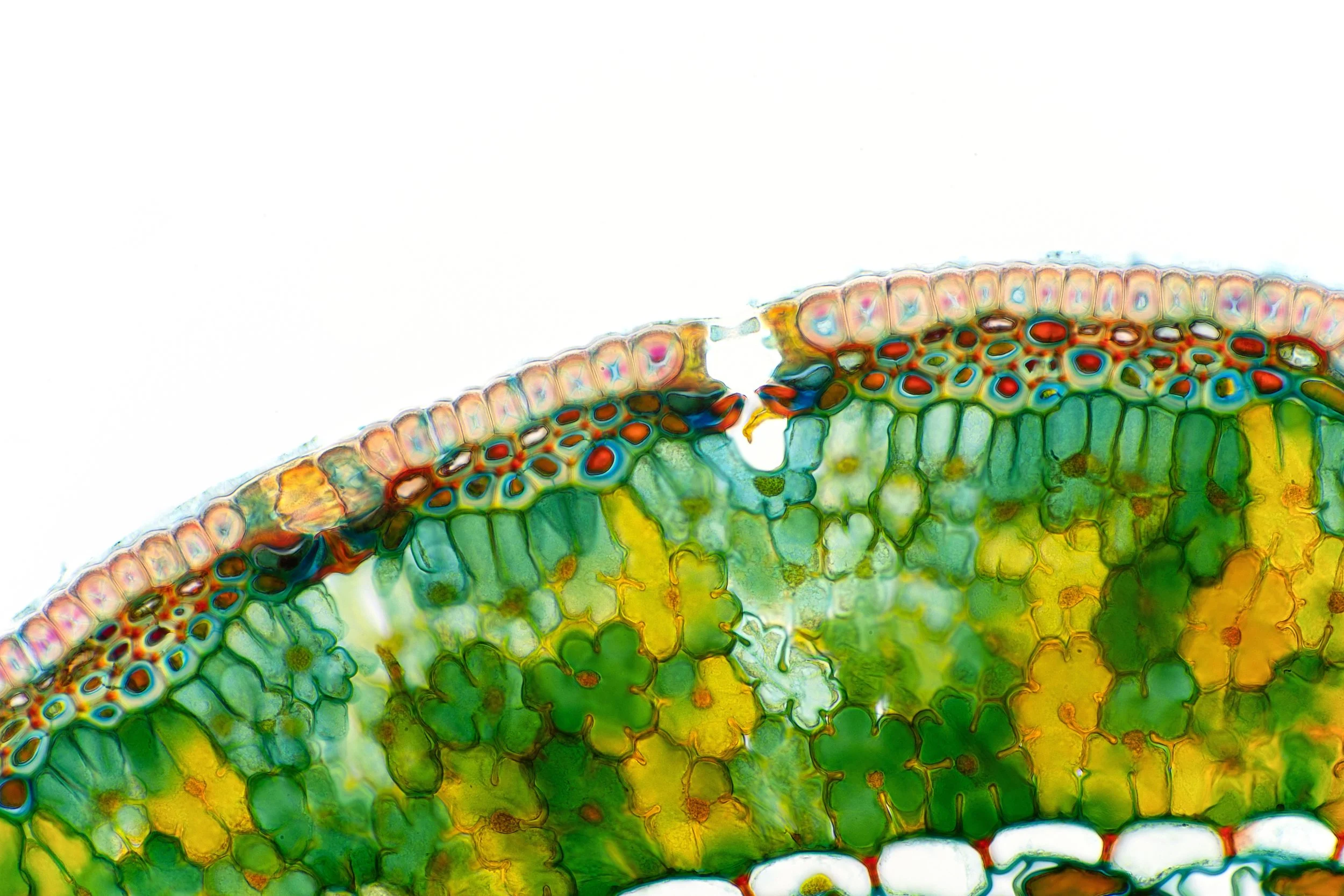
Stomatal crypts are sunken areas of the leaf epidermis which form a chamber-like structure that contains one or more stomata and sometimes trichomes or accumulations of wax. These are an adaption to drought and/or windy dry climate conditions.
And now you know !
Any gardening questions - feel free to ask
call us - (718) 392 9404
PLANT SPECIALISTS
GREENING NEW YORK FOR OVER 53 YEARS !
Article written by our Staff Horticulturist, Peter B Morris, BSc, MSc, MBA
All photographs used with permission @SHUTTERSTOCK