
Introduction
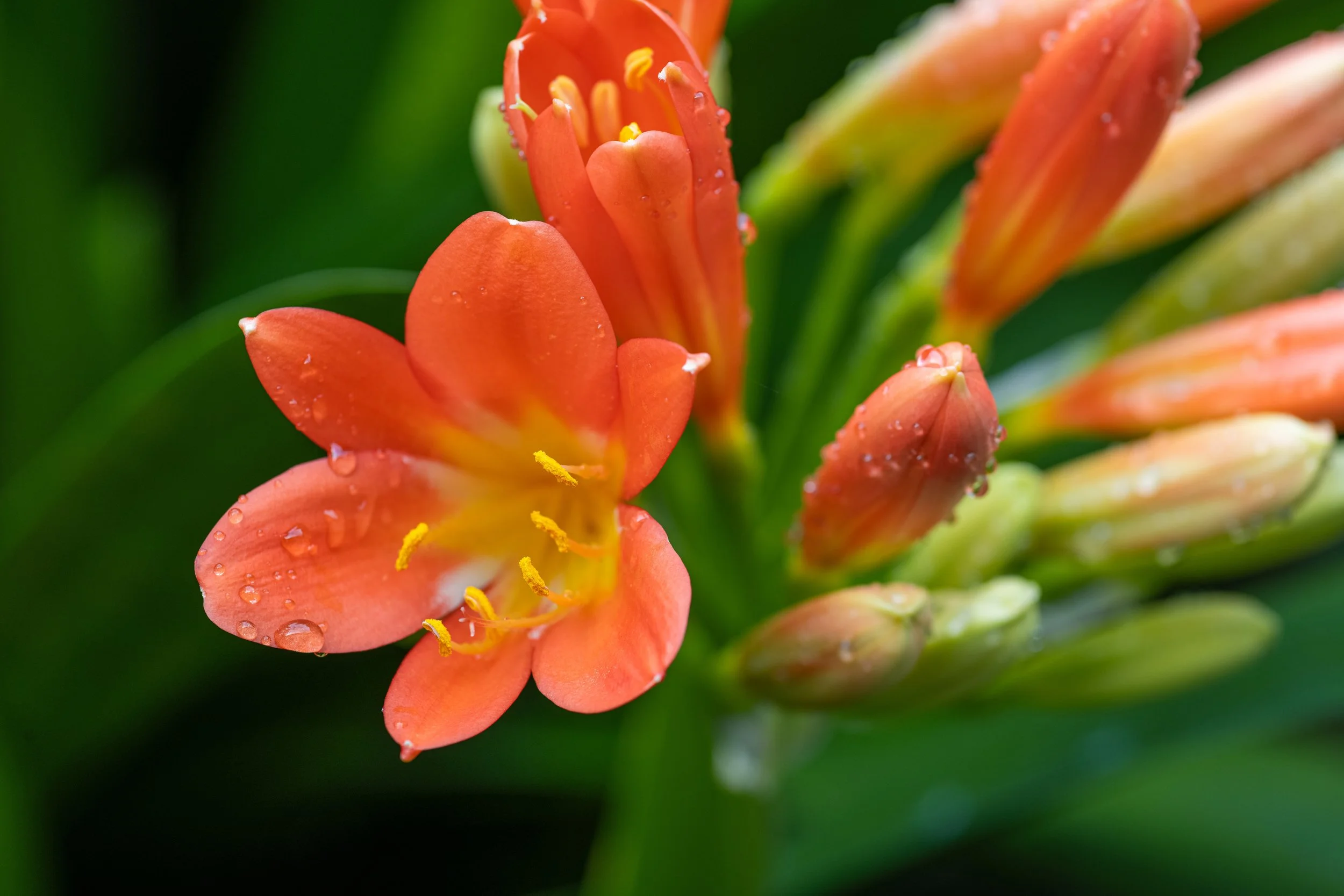
Also called bush lily, this amazing flowering plant was a basic staple for the home gardener for many decades. It quickly became a very popular indoor plant during the Victorian era – and is still the most common Clivia grown in the US.
It kind of takes care of itself and has very few issues as far as pests go. When it finally blooms you get a thick spike with up to 20 bright orange flowers.
Native
A member of the amaryllis family it originates from forests and bush lands of the subtropical regions of southern Africa specifically in KwaZulu-Natal.
The individual flowers will last a few days, but the succession of buds and blooms can sometimes last a few weeks. The plants form a fan of evergreen, strap-like leaves.
Care
This tough plant survives in both dry and moist soil and bright indirect light or deep shade, making it well suited to growing as a houseplant.
It is quite drought tolerant because of its thick, fleshy roots that store water. In pots, masses of roots often become so large that the plant and growing medium is forced up and out of the pot.
Clivia does best when slightly root constricted, so wait until the roots are really crowded before moving the plant to a larger container. They can be divided and repotted at any time of the year. Pull or cut the large fans of leaves apart, making sure each group has plenty of roots, and pot up in a well-drained, humus-rich soil (or soilless) mix.
For best results, place in bright diffused light such as a bright north window, or an east or west window shaded from the sun. During the growing season, water regularly but allow the growing medium to become dry to the touch between waterings. They can be fertilized monthly with half-strength fertilizer solution.
Overwatering and wet conditions will likely lead to root rots.
Blooming and Reblooming
Clivia is more likely to rebloom if given a rest period of 2 months in the fall. Just keep nighttime temperatures below 50°F, and the soil dry with just enough water so the leaves do not wilt. Do not fertilize at this time.
Once the flower stalk appears, increase watering and return the plant to room temperature. Plants grown in low light rarely flower but still make nice foliage plants. When the flowers fade, remove the stalk at its base.
Cultivar
Probably the most well-known hybrid is Clivia x cyrtanthiflora, purportedly a cross of C. miniata and C. nobilis, raised in Ghent, Belgium in the late 1850’s. In addition to the usual orange flowers with yellowish throats, there are forms with scarlet, dark red, peach, pink, and near-white flowers.
Toxicity
Clivia is considered poisonous because it contains small amounts of the alkaloid lycorine. However, large quantities must be ingested to cause symptoms of toxicity.
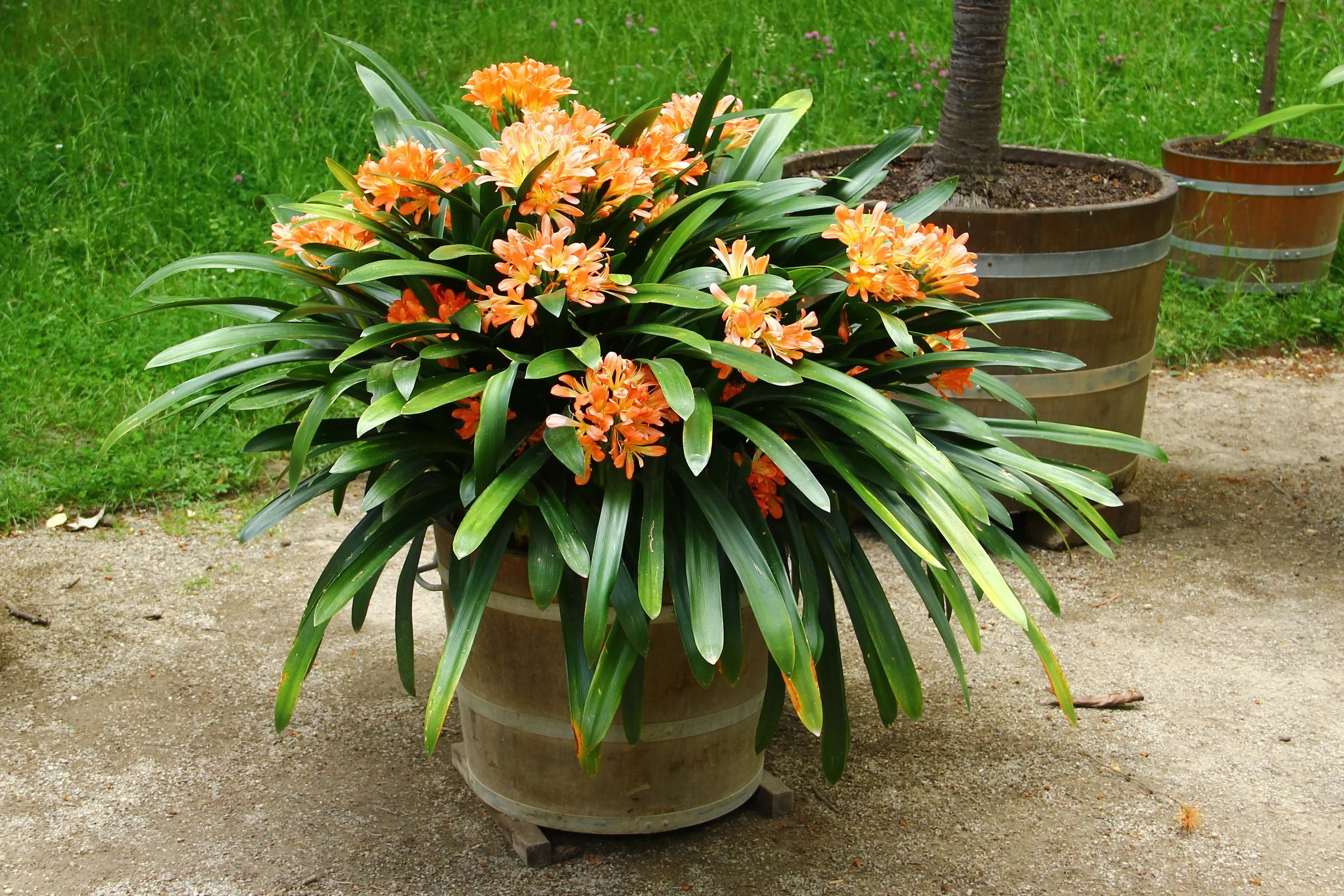
An easy and pretty plant for your home !
Want one ? - Call us - (718) 392 9404
PLANT SPECIALISTS
GREENING NEW YORK FOR OVER 53 YEARS !
Article written by our Staff Horticulturist, Peter B Morris, BSc, MSc, MBA
All photographs used with permission @SHUTTERSTOCK