Introduction

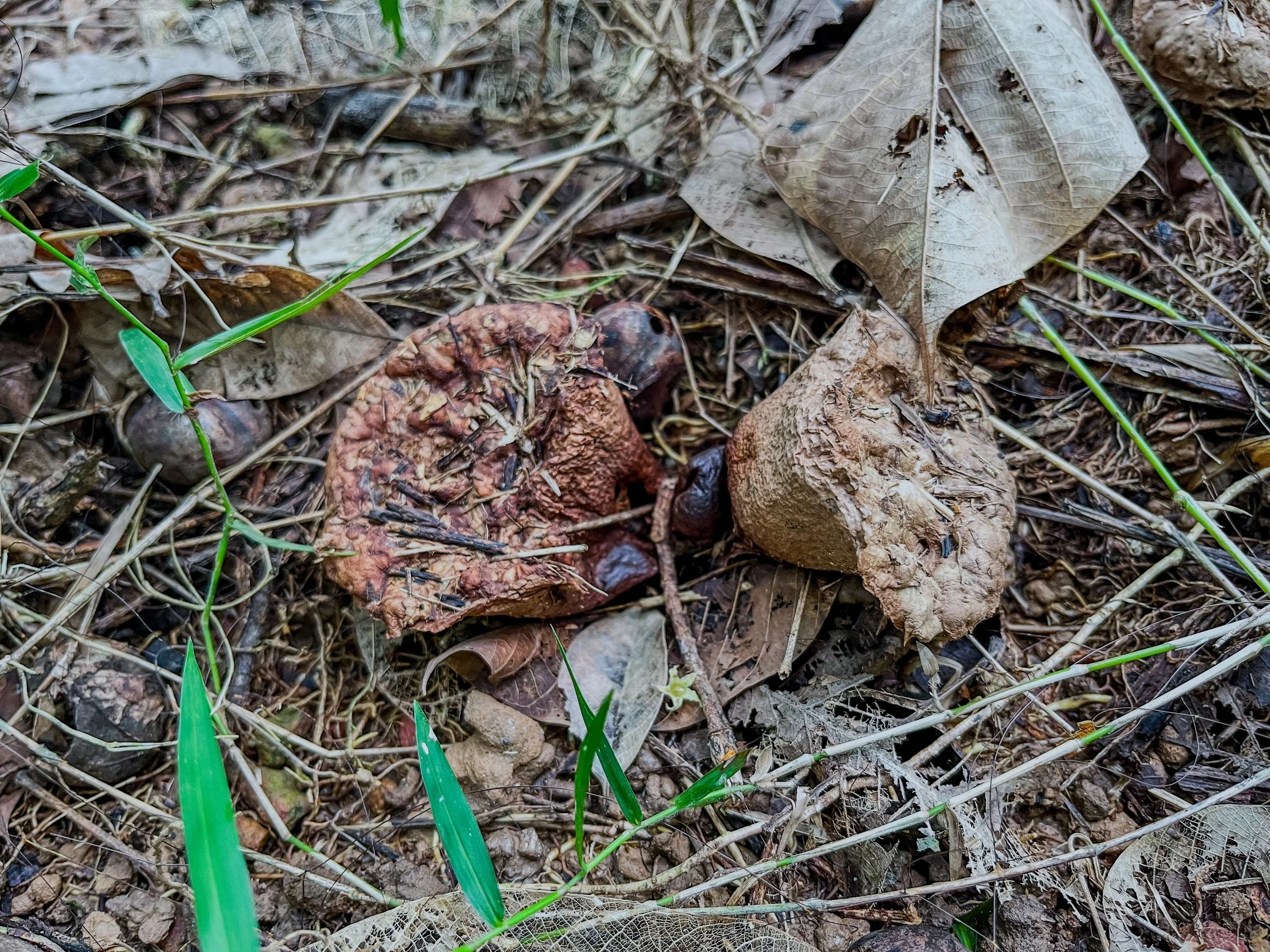
Lord almighty …. also known as The Dog Poop Fungus.

It’s an earth growing ball-like fungus in a family with a colorful array of common names.  This one is called the dog poop fungus; its cousin is known as the dead man’s foot. 

Less descriptive common names include, Bohemian truffle, pardeball, and dyeball.

Growth

It’s a mycorrhizal fungus living in association with tree roots.  Research has found it helps with plant performance, producing higher photosynthetic capacity, and better mineral nutrient absorption.

Under environmental stress conditions, such as water deficit or soil contamination, it can afford some degree of tolerance, with mycorrhizal plants showing lower growth decline and less stress symptoms.

It is one of the most frequent fungi to colonize pines in their native habitat. They are currently used in the commercial forestry industry to inoculate conifer seedlings for lumber and landscape trees. 

Where are they from ?

Found in gravel, sandy soil, in ditches, on lawns, during summer and fall.  It is widely distributed in North America but more common on the West Coast and in the southeast.

Ethnobotany

The genus is used in making natural dyes.  Some tint wool a dark gray brown, sometimes darker or with golden tones depending on the length of the dying process. Alkalinizing the dye batch can lead to greenish colors.

Toxicity

NOT EDIBLE ! – due to potential toxins and the risk of misidentification with other, poisonous earthballs.

If you see some  – let them be ! they are good for your trees!

We at Plant Specialists just enjoy them for their odd shapes.

PLANT SPECIALISTS

GREENING NEW YORK FOR OVER 53 YEARS !

Article written by our Staff Horticulturist, Peter B Morris, BSc, MSc, MBA

All photographs used with permission @SHUTTERSTOCK

Peter Morris

Peter was born and raised on a beautiful green island in the midst of a tropical rainforest. He was introduced into the world of plants at the age of six when his grandmother, an avid Spanish gardener herself, asked him to help her grow seeds for her pepper garden. He was hooked! By the time he was a teen, he had his own rose and orchid collection numbering in the hundreds. Botany was in his blood, and that is what he set out to study.

His passion brought him to NY in the late seventies to further his education. His tenacity allowed him to work full time at Plant Specialists while he completed a MS in Plant Biology. As a manager at the time he felt unsatisfied with his knowledge of business and business processes. Peter felt compelled to learn, so he then pursued and completed an MBA in Quality Management within a few short years.

Peter’s other passion is teaching. His natural ability is quickly consumed by our staff in all subjects in Botany, Horticulture, and Landscaping. He created an immense reference library of more than 3,500 plants providing an invaluable resource for our staff.

Peter’s breadth of knowledge and wisdom allows him to effectively diagnose the needs of plants. Sometimes just by walking into a garden he can create a prescription that fixes even the hardest issue. He is our Staff Botanist, Diagnostician, and all around Mentor. Recently, he has put his immense knowledge and skills into developing a new department that focuses on Plant Healthcare. As he puts it, “Magic through Science”. The PHC staff that surround him have avidly consumed his teachings. Substantially developing their own plant wisdom, many have taken on difficult plant health issues with spectacular results.

Plant Healthcare has been an instant success with customers! The proper treatment of insects and diseases including Organic methods has made pest control a necessity for every plant. Correcting hormonal imbalances caused by planting in containers or refurbishing soils leached of nutrients by irrigation systems are big challenges PHC has become quite comfortable addressing. The scientific approach to the complex demands of keeping plants healthy in our harsh city environment has made many a customer say WOW!

Next
Next

HAPPY NEW YEAR !